History of Cape Coast Castle
The full history of the castle — a stone fort that became the headquarters of British colonial trade on the West African coast, and a principal departure point for the Atlantic trade.
Cape Coast comes alive every year during the Oguaa Fetu Afahye Festival. Whether you’re traveling from Accra or abroad, this guide helps you plan your visit, book accommodation early, and explore the cultural highlights of the festival week. Discover the real Cape Coast — its heritage, its people, and its celebrations.
Cape Coast Castle Museum · Part of Ghana-Net · Online since October 2008
The Transatlantic Slave Trade, Without the Sugar Coating
This is not textbook education. Here you will find the documented history of Cape Coast Castle and the parts of it that are usually left out — the kingdoms that supplied the trade, the routes people were marched down, the forts that fell down because nobody kept them, and the ships that went on sailing after abolition. If you have ever suspected the history you were taught was incomplete, you are in the right place.
Victimhood is comfortable. It removes responsibility, complexity, and self-reflection. But history is never comfortable — and it is never one-sided.
Ghana will be seventy years old in 2027. The story of how it got here is told, almost everywhere, in a version that has been smoothed for visitors and for national pride.
We tell the other version. Not because it is more shocking, but because it is more accurate — and because a history that names only one set of participants is not a history. Europeans built the ships and paid the money. Africans marched the people to the coast. Both facts belong in the same paragraph, and on this site they are.
A Dark History — the shadowy history of Cape Coast Castle and the Gold Coast.
Inside the Slave Castles: The Untold Role of Local Ghanaians — the part the castle tours leave out.
Ghana, the Slave Trade and Historical Legacy — the long view, with pictures.
myghana2027.com — our portal for Ghana's seventieth independence anniversary, and the people who made it.
The full history of the castle — a stone fort that became the headquarters of British colonial trade on the West African coast, and a principal departure point for the Atlantic trade.
Who is buried within the walls, and who is not. Among them Rev. Philip Quaque (1741–1816), a name carrying both pride and paradox.
Far more than a garden. The Governor's private retreat, and a deliberate contrast to the trade, administration and imprisonment happening inside the castle. The stage where colonial power was displayed.
British dominance on the coast met strong resistance from the Ashanti inland — who were themselves deeply involved in the regional slave trade, selling war captives and rivals to European traders.
Overgrown paths, and the truth rising from the stones. Soldiers of Black and White regiments — but also Catholic sisters, young novices, and boys as young as seven.
Historical photographs and detailed information on Cape Coast and the Gold Coast.
The castle never stood alone. Hill forts watched the land behind it, satellite forts held the coast either side, and rival European positions sat a few kilometres away. Some still stand. One has vanished completely.
Built as Smith's Tower from mud and local stone, rebuilt and renamed a year later. Watchtower and lighthouse — the light that guided ships in, including the ones that carried people out.
First called Phipps Tower after a company governor, later renamed for a queen. Built in the year the Crown took the forts out of merchant hands, two years before the first Ashanti war.
No walls, no marker, no agreed location. It stood for over a century and then vanished — not destroyed in war, simply never maintained. What it proves about which history gets kept.
Two rival forts a few hundred metres apart — British Komenda and Dutch Vredenburgh. The wars that followed were fought by Europeans and largely decided by African rulers and traders.
One of the largest British forts on the coast, and a major slave-trading post. Far less visited than it deserves.
The largest concentration of European-built forts and castles in Africa — around forty along 500 kilometres of coast.
Elsewhere in the network: ElminaCastle.info — the oldest European building in sub-Saharan Africa, built 1482 · CapeCoastCastle.com — our sister site · Osu Castle — the Danish castle that became the seat of independent Ghana · Forts & Castles of Ghana — all of them, with dedicated sites.
Somebody marched people to the coast. Somebody sold them at the gate. Those people were not Europeans, and no honest account of this trade can leave them out.
The states that existed before, during and after the trade — with armies, revenues and foreign policies of their own.
Named, with what each did. The page most sites will not write.
The power that dominated this region before the Asante broke it — and its own role in the Atlantic trade.
The two most prominent peoples of this region, and the roles both played in the trade running through these walls.
The coastal militias and what their banners recorded — a visual archive of rivalry, proverb and threat.
How one kingdom shaped Ghana, the Gold Coast, Togo and Benin. The trade did not stop at modern borders.
The castle is the last chapter. Most people who went through the Door of No Return had already walked hundreds of miles. Read it in the right order and the dungeons mean something different.
The whole system, from the northern markets to the Atlantic.
Where the march from the interior ended and the Atlantic began. The tree stump captives were shackled to still stands at the water's edge.
The great market of the north, where people taken from across the savannah were bought and sold before the walk south. The wells where captives were washed before sale are still there.
A DNA breakthrough tracing seventeenth-century enslaved Africans back to their homelands — part of the effort to establish the precise origins of the twelve million people carried to the Americas between 1500 and 1850.
1807 is celebrated as the year Britain ended the trade. It ended the legal trade. What happened next is on these pages.
The abolition nobody mentions. Denmark abolished the transatlantic slave trade before Britain did, and the story is rarely told in English. Britain's 1807 Act was a humanitarian achievement and a wartime measure aimed at French colonial interests. The 1833 Slavery Abolition Act paid £20 million — around £18 billion today — to slave owners for their "loss of property," financed by a loan that British taxpayers finished repaying in 2015. Not one penny went to the enslaved.
Four accounts from the Gold Coast, told rather than read. Each links to the full written story.
A Fante warrior remembers Nsamankow — the battle in which a British governor was killed and the Ashanti took the field.
Two people, named. Most of the twelve million were not.
The journal of a Basel missionary, and an early account of what he found on this coast.
King of the Ahanta, who led a fierce resistance against Dutch colonial rule in the nineteenth century. He was executed and his head taken as a trophy — and it stayed in the Netherlands for over 150 years.
The initiative that drew thousands to Ghana — and what it set in motion afterwards.
Because it is not straightforward, and pretending it is helps nobody who makes the journey.
For those looking for an actual line rather than a feeling — how to trace it, and what the records can and cannot tell you.
The first independent Black republic, and the coast people were taken from. The same water, from both sides.
We document what is being done with this heritage, not only what happened in it.
Cape Coast Castle · Elmina Castle nearby · the 1824 War Cemetery · Fort Victoria · Fort William · Emintsimadze Palace, the Fante royal palace.
Kakum National Park and its canopy walkway · Hans Cottage Botel crocodile pond · Brenu Akyinim Beach · Oasis Beach · Monkey Forest Resort.
Cape Coast Cultural Centre · the fishing harbours · Cape Coast Market. The town is one of Ghana's most historic and atmospheric, and worth more than a day.
Donkor Nsuo is 40 km up the Kumasi road. Doing it before the castles follows the actual direction of travel, and changes what the dungeons mean.
The dungeons are not an exhibit. People become distressed, particularly diaspora visitors, and that is a normal response. Allow a full morning, plan nothing demanding afterwards, and go with someone rather than alone.
Book early — the town fills during festival week and around major events. Find accommodation · GhanaHotels.biz · GhanaFlights.info.
Plan your castle tours ahead. The guides are the experience — many have done this for decades — and packages combining Cape Coast, Elmina and Kakum save a great deal of transport trouble. Instant confirmation, free cancellation, best price guarantee.
Our own guides: Guided Tours of 6 Forts and Castles · Ghana Gateway Experience 360 · Ghana3d.com — find your roots and rise. We may earn a commission on Expedia and Viator bookings at no additional cost to you.
Cape Coast is one town in one region. The rest of the country is on ghana-net.com — the largest online archive of Ghana's tourism and heritage.
Also: Regions and Capitals of Ghana · Other Cities of Ghana · National Parks and Protected Areas · The Complete Guide to Ghana.
All of these sites are part of Ghana-Net, the largest online archive of Ghana's tourism and heritage. Over fifty African information, tourism and travel sites, built and photographed by one person over twenty-five years.
Elmina Castle · Cape Coast Castle · Osu Castle · Fort Komenda · Fort William Anomabo · Fort Batenstein · Fort Prinzenstein · Fort James · Fort Ussher · Fort Visão · Fort Metal Cross · Fort Good Hope · Fort Amsterdam · Kumasi Fort
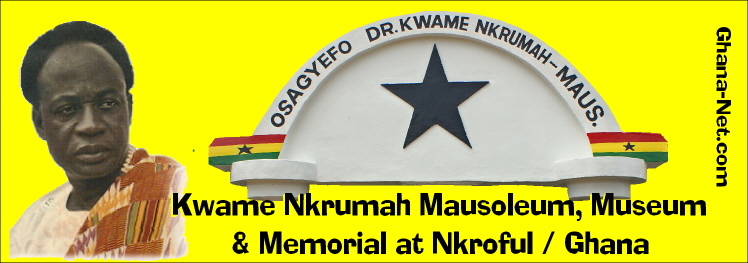
Ghana Museums · National Museum of Ghana · Volta Regional Museum · Yaa Asantewaa Museum · W.E.B. Du Bois Centre · Nkrumah Mausoleum, Nkroful · 1939 Earthquake Archive · Erased Graves
Kakum National Park · Mole National Park · Paga Crocodile Ponds · Shai Hills · Aburi Botanical Gardens · Ho & the Volta Region
Ghana-Net.com · Ghana0.com · Ghana3d.com · Ghana@70 Portal · Ghana Live Radio · Nigerian Radio · Ghana Photographer · Ghana Mirror · GhanaHotels.biz · GhanaFlights.info
CapeCoastCastleMuseum.com — online since October 2008. Part of the Ghana-Net network, the largest online archive of Ghana's tourism and heritage. Site conditions, opening arrangements and access at Ghanaian heritage sites change without notice — confirm locally before travelling. We may earn a commission on Expedia and Viator bookings at no additional cost to you; no operator has paid to appear on this site. All photography © Remo Kurka. Usage strictly by prior authorisation only.
The Governor’s Garden was far more than a simple garden.
It symbolized colonial authority and served as: the Governor’s private retreat, and a deliberate contrast to the administrative and military functions of the castle. While trade, administration, and imprisonment took place inside the castle, the garden was the stage where colonial power was displayed.
Walk through the overgrown paths of Cape Coast’s European War Cemetery, and the truth rises from the stones. Between 1824 and 1905, this ground became more than a military burial site. Here lie soldiers of Black and White regiments, yes — but also Catholic sisters, young novices, and even boys as young as seven.
Dive into our latest collection of captivating historical narratives that shed light on the rich and complex history of
Cape Coast Castle, Elmina (Castle), (Fort) Komenda, and the significant Ashanti-British wars.

Dungeons during Transatlantic Slave Trade
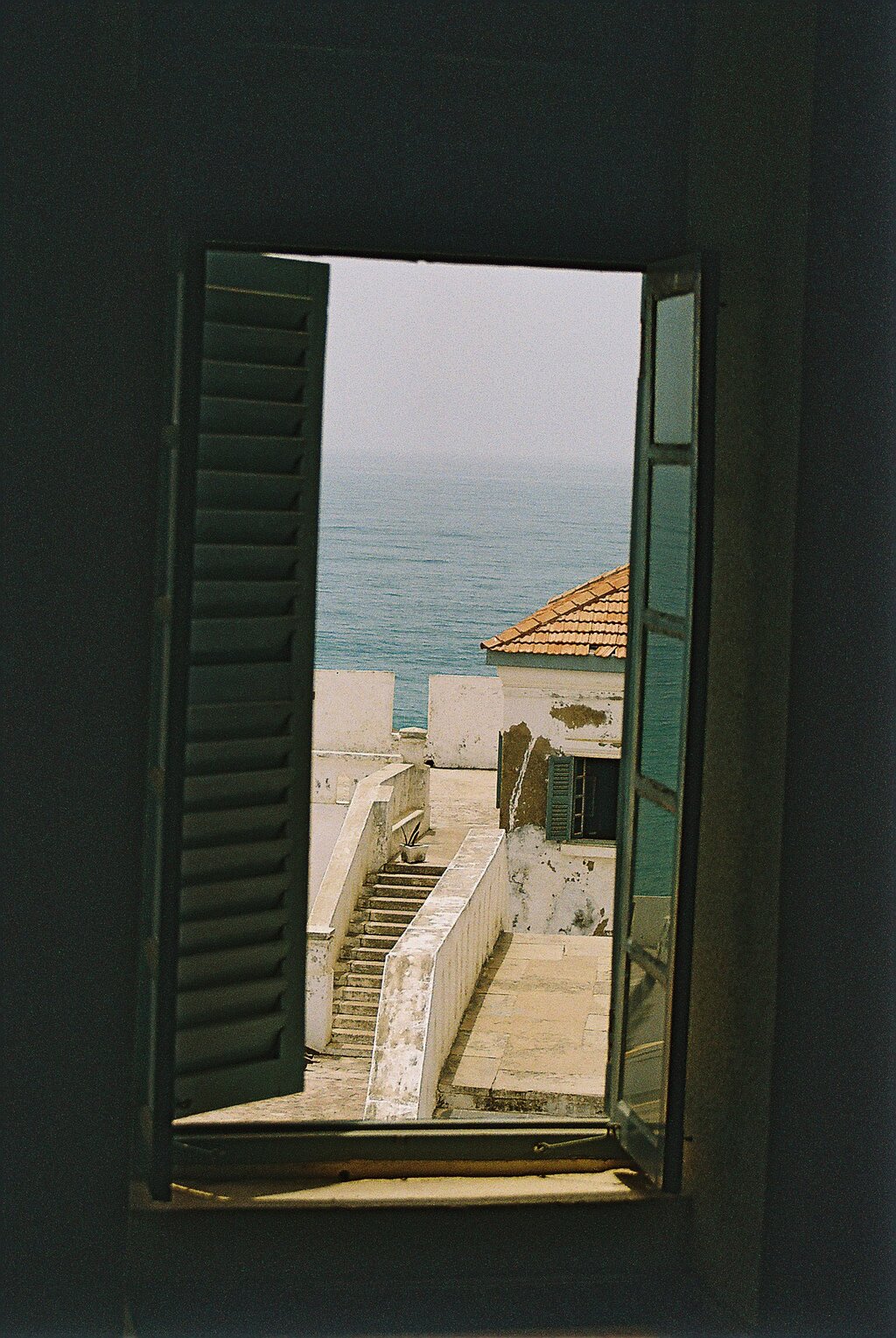
What the Slave Trade Governur could see, out of his window!
By the time Britain officially abolished slavery in 1833, there were about 46,000 registered slave owners across the British Empire. These individuals held legal claim over nearly 800,000 enslaved men, women, and children, mostly in the Caribbean, parts of Africa, and South Asia.
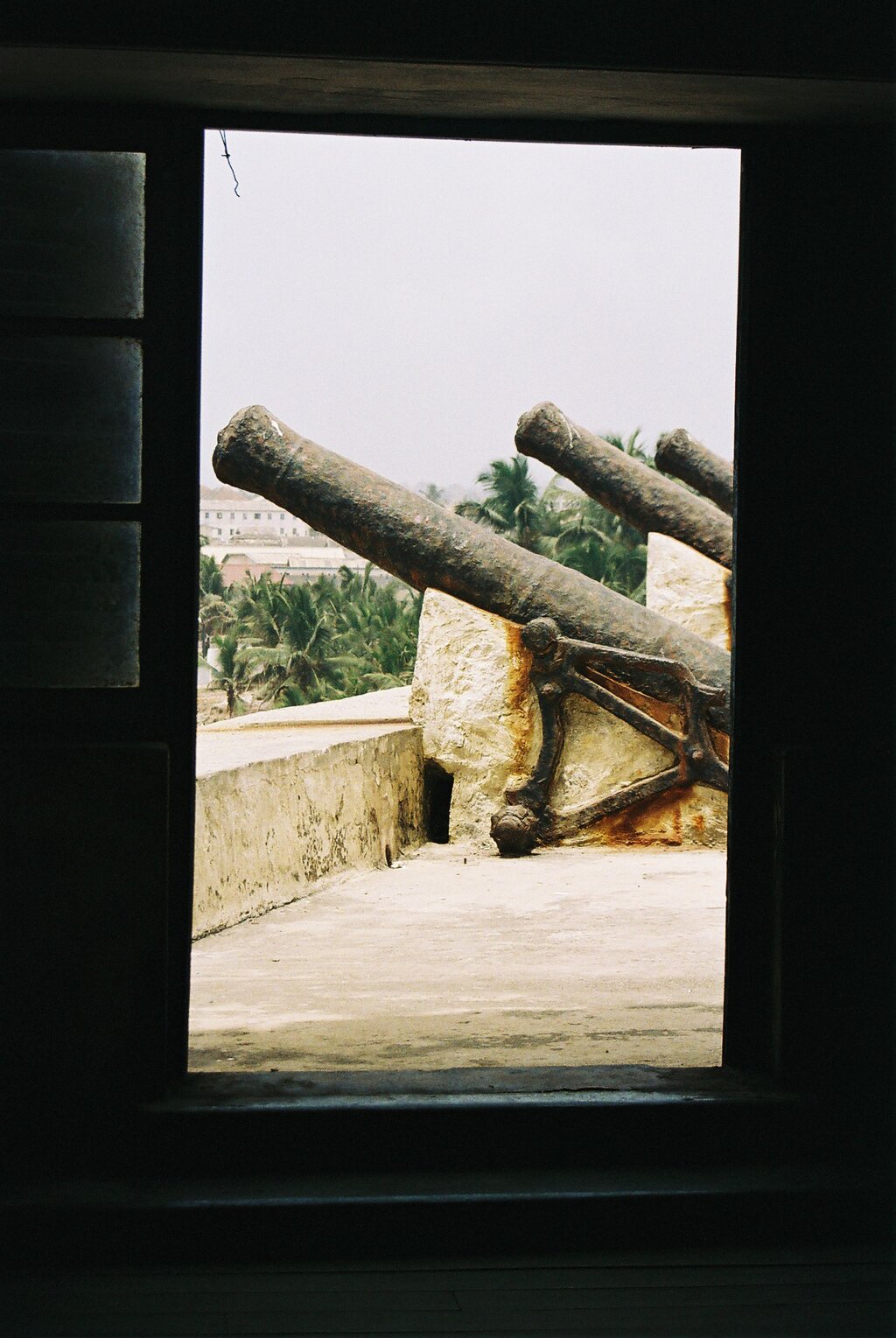
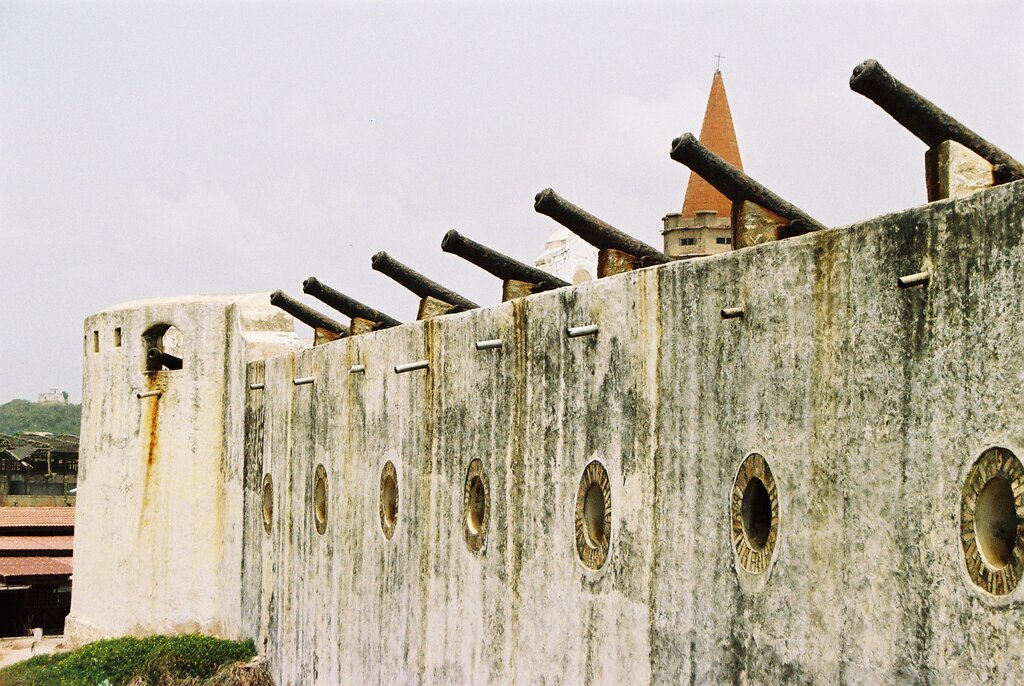
Canons to defend their slave and gold trade!
Below are the entrance fees applicable to National Museum and Castles prior to the recent revision:
Categories | Entrance Fee (GH₵) |
Lower & Upper Primary Students (Ghanaian) | 5.00 |
JHS Students (Ghanaian) | 6.00 |
SHS Students (Ghanaian) | 6.00 |
Tertiary Students/Volunteers with Identity Card (Ghanaian) | 10.00 |
Ghanaian Adults | 20.00 |
Non-Ghanaian Lower & Upper Primary Students | 20.00 |
Non-Ghanaian JHS/SHS with Identity Card | 30.00 |
Non-Ghanaian Tertiary Students/Volunteers with Identity Card | 60.00 |
Non-Ghanaian Adults | 80.00 |
All sites are part of Ghana‑Net, the largest online archive of Ghana’s tourism and heritage websites.